
Let’s be honest. I moved to Charlotte, NC four years ago, leaving a robust Arizona network behind. At the time, I didn’t think much of it because I still had many ties to people and businesses in Arizona. While I finished projects with those partners, I realized I hadn’t met many business people in my new home city. That changed last week when I attended the AI Friendly Summit. While the writing and publishing industry is anti-AI, I went into the conference with an AI-assisted writing philosophy that Claude AI is my assistant, not a replacement. My writing, and that of my clients, is still human first.
Spoiler alert: To my surprise, each session I attended was filled with other professionals across industries, business types, and sizes who also believe that AI is human first. I felt like I was in rooms where I belonged.
Key Takeaways
- AI is human first. Every tool at the summit depended on what people bring: stories, knowledge, voice, and judgment.
- AI prepares. Writers decide. AI can take the tasks you’d happily give away, while the writing decisions stay yours.
- You don’t have to use everything. Knowing what’s possible helps you choose the one or two tools that fit.
What Do Writers Own That AI Doesn’t?
Abigail Merrill, CEO and Lead AI Consultant at GrowthUP Partners, asked the room: What do we own that AI doesn’t own? Her answer is similar to mine: AI doesn’t own your voice or lived stories. It doesn’t own the systems and processes you already have in place. She recommends starting with an assessment of the tools your business currently uses, then assessing where AI could make the business more efficient. (She also writes about how to get your content cited by ChatGPT and AI search.) That’s exactly what I’ve done as a writer who uses AI.
My preferred platform is Claude. Earlier this year, I started with personal routines, braindumping what I wanted to accomplish in a day, week, and month. I asked Claude to create a schedule for me based on that list. Then I filled it in with business- and writing-related goals and tasks. It became the framework I used every day. At the end of the week, I ask Claude to evaluate what I’ve done, what needs to carry over to the next week, and what I can improve. It has been super helpful in creating a personalized to-do list, but Claude couldn’t do it without my specific inputs and feedback.
Next, I took a class about writing Claude prompts. This is when I built my brand voice for Agency Content Writer in Claude. For years, all my writing style rules lived in my head. Now they live in a brand voice document Claude can use, too. I use the document and prompts for social media and blog ideas and outlines. I was impressed with how well Claude could capture my voice, and how it felt like this former data analyst could use her skills to create prompts and content. That’s where AI and human creativity work best together. Claude can follow the rules, but I had to write them first.
As I continue to use AI as a writer, I think of Claude as my assistant for research and administrative tasks, not a replacement for me. That’s what human-first AI looks like in practice.
Where Does AI-Assisted Writing Help Without Replacing Writers?
My next summit takeaway was that AI-assisted writing can take many forms. For me, AI helps most with the work around the writing. Claude helps me research topics, plan my week, organize my content tracker, and turn a messy brain dump into a first outline. A summit tip stuck with me, too: if you’re doing a task every week, that’s your first automation. None of that replaces the writing. Instead, it clears space for it.
Writers should still be cautious, though. Without guidance, AI makes assumptions about its output based on past prompts.
In later sessions, we built dashboards. Since I had told Claude earlier in the project to match my content to brand colors, the dashboard came out in my brand colors. The problem was that in the summit prompt, I had not asked AI to build the dashboard in any specific colors. The lesson? Write prompts like a brief you give a new employee on their first day.
That would have been helpful to learn before my content tracker got tangled in Claude notes the week before the summit. The tracker has multiple tabs where I’ve consolidated documents, and it’s more efficient. I don’t have to search for information in different places because it’s all in one document. The trouble started when I told Claude, “Do XYZ and update the tracker.” Claude made assumptions and dumped a lot of data that didn’t need to be in the tracker. I had to revise what I was telling the AI so my tracker was as efficient as I intended.
One of the best uses of AI for writers is automating manual tasks. Just remember to give it specific instructions, or you’ll spend time untangling what it puts together. I also discovered that politeness doesn’t matter to Claude. Still, I say please and thank you because I consider Claude my assistant, and I wouldn’t be rude to a human.
How Do Writers Keep Thinking for Themselves?
The more I use AI, the more I notice how easy it is to stop thinking. Claude hands me a clean outline or a tidy summary, and it’s tempting to accept it and move on. Several summit sessions circled back to this same concern.
Dr. Tara Youngblood put it simply: trust is built in the workflow, not the output. A polished draft doesn’t prove the thinking behind it is sound. Instead, the process you build around AI is what earns your trust.
Samuel Kern’s slide said, “AI prepares and engages. Humans approve and close.” For writers, I’d put it this way: AI prepares. Writers decide.
After all, deciding is where the critical thinking happens. During the Mental Health and AI panel, the question came up of how we keep people from becoming numb and dumb. The panel’s answer was that we still need to be critical thinkers.
That’s why I keep personal guardrails for how I use AI in my business. Here are a few of mine:
- AI never writes my stories. It can help me sort, outline, or ask questions, but the stories and the voice come from me or my clients.
- I check everything AI gives me. I verify facts, quotes, and numbers before they go anywhere.
- I make the final call. AI can suggest, but I decide what gets published.
Another way I stay in charge is by having AI ask me questions instead of answering for me. That mirrors how I work with ghostwriting clients. I don’t walk into an interview with the answers. Instead, I ask questions until the client’s story takes shape in their own words. When Claude interviews me about a topic, I do the thinking, and Claude keeps me organized.
Dr. Sharon Torrence Jones, Founder of the Dottie Rose Foundation, shared a simple framework at the summit: Understand, Use, Build. Here’s how it translates for writers:
- Understand: Learn what AI does well and where it guesses, so you know when to double-check its work.
- Use: Start with the tasks you’d happily give away, like research, scheduling, or updating a content tracker.
- Build: Once you trust your workflow, create tools that make AI work your way, such as a brand voice document or a prompt library.
I walked into the AI Friendly Summit as a writer who already uses AI. I walked out with a clearer picture of what’s possible and new connections in my city. Here’s the thing: you don’t have to use everything. There are so many tools and options, and your business doesn’t need all of them. Knowing what’s possible helps you choose the one or two that fit how you work.
It’s OK to start small, and it’s OK to wait until you’re ready. Whatever you decide, your voice and your stories stay at the center.
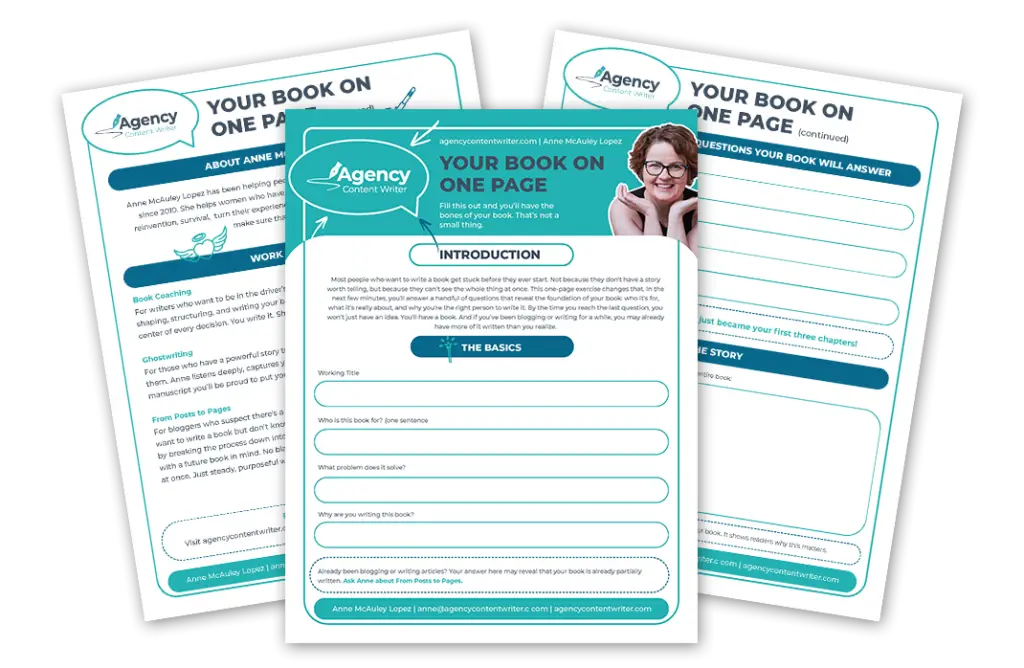
If you’ve been blogging for a while, you may have more of a book written than you realize. The Content Audit Prompt Pack shows you how to use Claude as a thinking partner to turn your website into a working book plan. Would you rather talk it through first? Book a discovery call with me.
Everyone has a story. Yours just needs to be told.
Related Links
Review each before linking.
- Ethical Ways Writers Can Use AI: A Practical Guide. Check its Claude privacy line against Anthropic’s current terms first.
- Should You Write a Book With AI? A Practical Guide for Thought Leaders
- How I Used Claude + STORIES Framework to Build the Writing Plan for My Book
- Interesting Ways Bloggers Use ChatGPT to Benefit Clients (from 2023, so check that it still sounds like you)
- From Posts to Pages
Frequently Asked Questions
What is AI-assisted writing?
AI-assisted writing means using an AI tool to support parts of the writing process, such as research, outlining, or organizing ideas. The writer still provides the stories, voice, and judgment. In short, AI prepares, and the writer decides.
Will AI replace writers?
Not the writers who bring their own stories and judgment to the work. At the AI Friendly Summit, session after session came back to the same point: AI depends on people for direction, context, and final decisions. What changes is how writers spend their time: less on busywork and more on the writing itself.
What is the difference between AI writing and human writing?
Human writing comes from lived experience, a personal voice, and intentional choices about what to include. AI writing is generated from patterns in existing text, so it can sound polished but generic without a person guiding it.
How can writers use AI without losing their voice?
Start by documenting your voice in a brand voice document, including your style rules, favorite phrases, and what you avoid. Then give AI specific instructions every time, the way you’d brief a new employee on their first day. Finally, review everything it produces before it goes anywhere.
What should writers never hand over to AI?
Your stories, your voice, and your final decisions should stay with you. AI can help you sort material and build an outline, but it shouldn’t write your personal stories or decide what gets published. You should also check any facts, quotes, and numbers it provides before you use them.
Who is Anne McAuley Lopez of Agency Content Writer?
Anne McAuley Lopez is the founder of Agency Content Writer, a Charlotte, NC, book ghostwriting, book coaching, and blog writing business she started in 2010. She helps mid-career professionals, entrepreneurs, nonprofit leaders, and thought leaders turn their stories into books and blogs. Anne is also the author of We Don’t Get to Ring the Bell and uses Claude as an assistant for research and administrative tasks, while keeping the writing human-first.