
When was the last time you considered publishing a book about your nonprofit? If the idea seems overwhelming or unnecessary, you might want to reconsider. A nonprofit book project could be one of the most powerful marketing tools your organization isn’t using yet.
Recently, I had the pleasure of joining Julia C. Patrick and Jarrett Ransom on The Nonprofit Show to discuss how nonprofits can leverage publishing to amplify their mission, connect with donors, and preserve their legacy. The conversation revealed surprising opportunities that many organizations overlook.
Why Nonprofits Should Consider Publishing Books
Think about it: when you attend a conference or speaking engagement, you bring business cards and branded pens. What if you could also bring a book? Imagine telling your audience that every copy sold contributes directly to your cause. That’s not just marketing—that’s storytelling with impact.
Books serve multiple purposes for nonprofits:
For Founders and Leaders: If you’re speaking at events, a book gives you credibility and provides a tangible way for people to engage with your story beyond a 30-minute presentation. Jarrett noted that more conferences are inviting nonprofit founders as keynote speakers, and having a book to sell creates an additional revenue stream while spreading your message.
For Organizations: A book becomes a multi-purpose tool. You can give it to donors, share it with volunteers, include it in fundraising baskets, or use it as a premium for new supporters joining your email list.
For Impact: Books preserve your organization’s history and mission in a format that can reach people who might never visit your website or attend your events.
What Kind of Book Should Your Nonprofit Write?
During our conversation, we identified several compelling storylines that work well for nonprofit books:
The Origin Story
Every organization has a “why.” What inspired the founder to start this work? Take the Phoenix-based founder I mentioned who serves the homeless community. Her son struggled with mental illness and was homeless. She didn’t want any other mother—or any other child—to experience that pain. That’s a powerful origin story worth sharing.
Milestone Commemorations
Celebrating your 10th, 15th, or 25th anniversary? A book can commemorate your journey and highlight your impact. Think about it: you started with one soup kitchen, and now you have five across the metropolitan area. That growth story deserves to be told.
Impact Collections
What if you gathered 25 success stories from the individuals or families you’ve served? These vignettes create a powerful testament to your work. People connect with stories, and highlighting real transformations makes your impact tangible.
Educational Resources
Look at Habitat for Humanity. Their book collection spans founder memoirs, children’s books about housing, and guides for families partnering with Habitat. They’ve created resources for every audience they serve.
The Ghostwriting Process: Less Overwhelming Than You Think
I know what you’re thinking: “I don’t have time to write a book!” Here’s the good news. You don’t have to write it alone.
Working with the right ghostwriter makes the process manageable. My editor and I recently completed a two-day intensive with a client, during which we conducted 10 podcast-style interviews covering 10 chapters. The client left knowing the heavy lifting was done, with a few stories to add later. If you’ve got a writer on your team, consider hiring a book coach to guide the project to the finish line.
The key is finding the right team. Don’t work with the first person who offers help. Ask to see samples of books they’ve edited or ghostwritten. Make sure they have a clear process and, most importantly, that they understand how to capture your authentic voice.
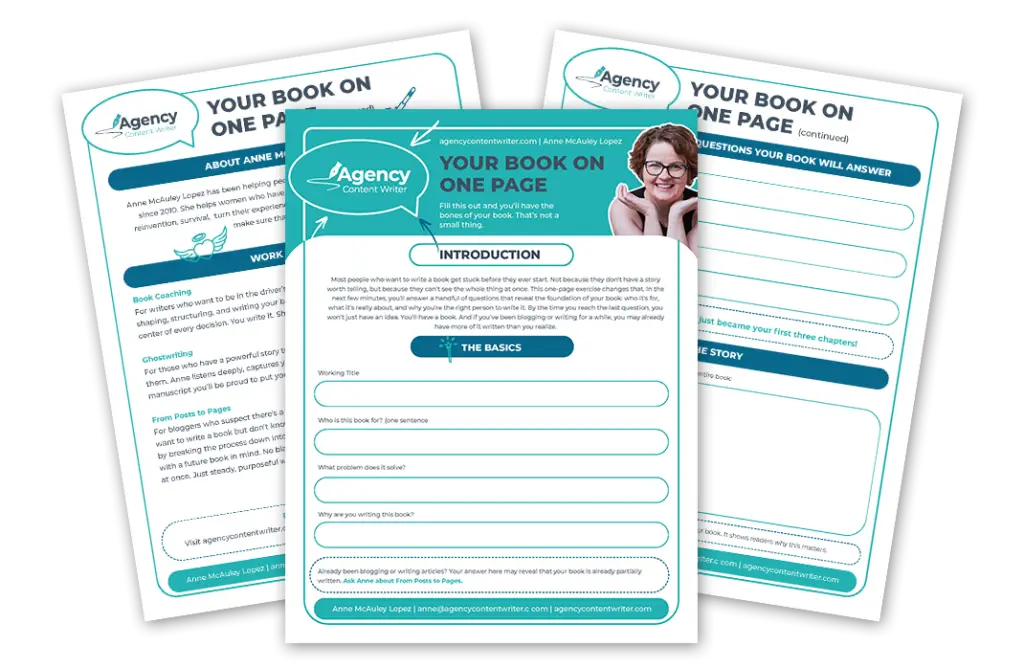
Here’s my secret: I used to freeze up thinking about writing “chapters.” Then my editor asked me, “What’s the difference between a chapter and a blog post?” Nothing, really—just a longer blog post. That mindset shift helped me finish the rest of my book in two weeks. Sometimes we just need to reframe the challenge.
Realistic Timelines and Approaches
Book projects typically take three to twelve months, depending on the scope. A three-month project works well when you do intensive interviews upfront and have a clear content direction. Research-heavy projects, such as preserving a founder’s legacy when the original team has aged out, might take six to twelve months.
The timeline really depends on you and your team’s availability. Remember, this is a marketing initiative, not an additional burden. Treat it like any other strategic project.
Repurposing Content You Already Have
You probably have more book-ready content than you realize. Consider:
- Newsletter stories about the families you’ve helped.
- Blog posts explaining your services.
- Podcast interviews (easily transcribed with affordable tools)
- Notes from volunteers and staff
- Annual reports documenting your impact.
You’re not reinventing the wheel. You’re organizing and expanding content you’ve already created. Once you have the book, you can repurpose chapters back into blog posts, social media content, and website copy. The content is available in multiple formats.
Making Your Voice Heard
One concern I often hear is: “How do I make sure it sounds like me?” This is where working with an experienced ghostwriter matters. The process should include face-to-face or video conversations where your personality and tone come through. The ghostwriter essentially becomes an editor who organizes your words, asks clarifying questions, and ensures the final product sounds authentically like you.
It’s your content. You own it. The writer is crafting and organizing, not taking over your story.
Beyond the Book: Additional Benefits
Publishing a book opens doors beyond just having something to sell:
- Speaking Opportunities: Pitch yourself to podcasts and media with your book as the hook.
- PR Value: Work with your marketing team or a PR volunteer to leverage your book for media coverage.
- Library Placement: Donate copies to local libraries to expand your reach.
- Website Content: Pull excerpts for your blog and website.
- Donor Engagement: Include signed copies in major donor stewardship packages.
Ready to Start Your Book Journey?
If you’re considering a book project, start by asking yourself:
- What story does our organization need to tell?
- Who is our primary audience for this book?
- What content do we already have that could be repurposed?
- What’s our realistic timeline and budget?
- Who on your team or your network could support this project?
Every nonprofit has a story. Yours just needs to be told. Whether you’re a founder with a compelling “why,” an established organization celebrating milestones, or a team preserving important legacy work, a book can amplify your mission in ways that business cards and brochures simply can’t match.
Your nonprofit’s story matters. The question isn’t whether you have enough to say, it’s whether you’re ready to share it in a format that will inspire, educate, and create lasting impact.
Want to learn more about book projects for nonprofits? Watch the full episode of The Nonprofit Show featuring Anne McAuley Lopez, Jarrett Ransom, and Julia C. Patrick.